



Vietnam Football: What Exactly is the Roadmap?


Returning with their strongest lineup, the Vietnam national team did not expend excessive effort to secure a 3-1 victory over Malaysia, a team that had defeated us by four unanswered goals in the first leg of the 2027 Asian Cup qualifiers.
Vietnam's national team-level football possesses genuine strength, not mere pretence. However, we must wait until the 2027 Asian Cup Finals in Saudi Arabia next year, when the team faces Asia's top football nations, World Cup representatives, to truly discern what is genuine and what is superficial.
Recall three years ago, when the 2026 World Cup qualification campaign began with 48 slots, Vietnamese football hastily set the target of reaching the World Cup in North America. Earlier, when the U19 generation featuring Cong Phuong and his peers matured and gained recognition in some regional youth tournaments, VFF leaders also prematurely named the 2018 FIFA World Cup Finals.
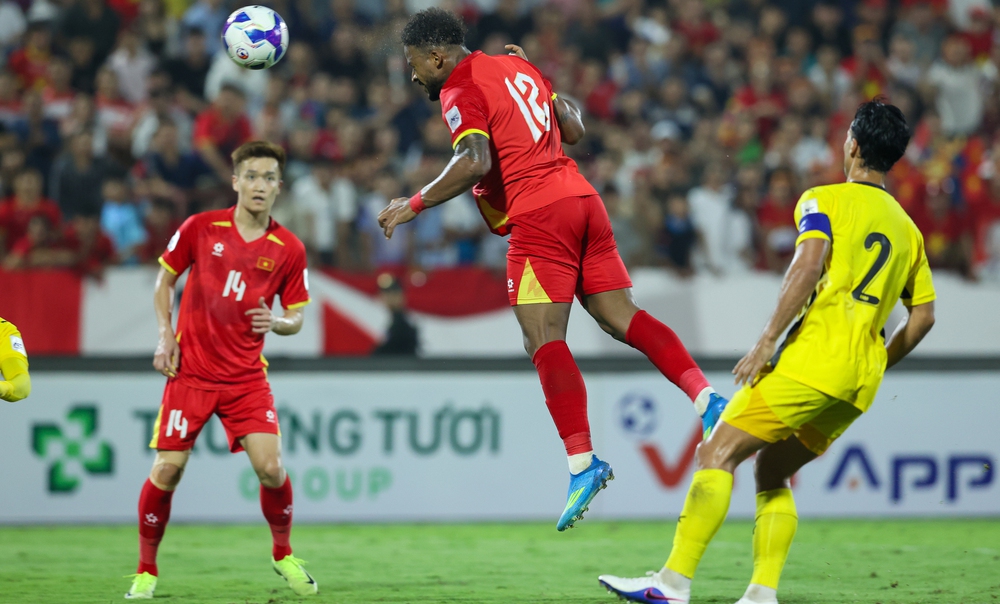
The emergence of new talents like Xuan Son is a positive signal for Vietnamese football at the national team level, but to realize the World Cup dream, we need a more sustainable system. Photo: Hoang Linh
A roadmap is not an ambiguous concept as many think; it is genuinely tangible. We often become impulsive upon having a few talented generations, forgetting that football always requires accumulation and always needs a roadmap.
Take Japan, Asia's number one football nation for over 20 years, co-host of the 2002 FIFA World Cup Finals, which also required meticulous accumulation. They recently defeated England 1-0, having previously beaten Brazil, Germany, Spain...—the world's strongest football nations, all World Cup champions. Yet the Japanese still approach North America 2026 with humility.
Let's review each step of Japanese football's progress. From importing players in the 90s and simultaneously sending players abroad for training, to developing internal resources, the domestic league, and now exporting players. Nearly the entire starting lineup in Japan's recent friendly against England is playing abroad.
Since the 1998 World Cup in France, just six years after the J-League's inception, Japan has never missed the planet's biggest football festivals, unlike Italy or other established European football nations. Japan improves daily, even leaps forward. But crucially, they do not overestimate their strength.
Returning to Vietnamese football. The national team's best achievement is reaching the third round of the 2022 FIFA World Cup Asian qualifiers. Previously, we also twice reached the Asian Cup quarter-finals. Thus, we have only approached the continent's top football nations, never being ready to defeat them to secure various slots.
Regardless of whether the FIFA World Cup Finals may expand slots in the future, Vietnamese football must still have a roadmap for sustainable development. Observation suggests we need more generations of players, with proper succession, to consistently challenge Asia's top 10 to hope for success. Regularly securing Asian Cup quarter-final or semi-final slots is the guarantee. This is difficult, but not impossible.
The Japanese football philosophy, including coach training with Japanese instructors and experts frequently present in Vietnam for years, is the guiding principle. Learn from them, as that is the optimal roadmap to the World Cup, unless we have the capacity to host the planet's biggest football festival.


Wonderfulshortvideo
tottenham relegation tottenham relegated


Rodrygo ACL tear acl injury rodrygo injury real madrid 0-1 getafe
Great defending from Rüdiger 👏
Ganglion cyst removed
max dowman highlights today max downman vs mansfield town arsenal 2-1 mansfield town
User SportScoop has posted a video.
scott mctominay aura scott mctominay pictures mctominay edit
 Links
Links
 Contact
Address:UNIT 1804 SOUTH BANK TOWER, 55 UPPER GROUND,LONDON ENGLAND SE1 9E
Number:+85259695367
E-mali:[email protected]
 App
App


